How to Cite Social and News Media Violent Extremism Isis and Online Speech Research Review
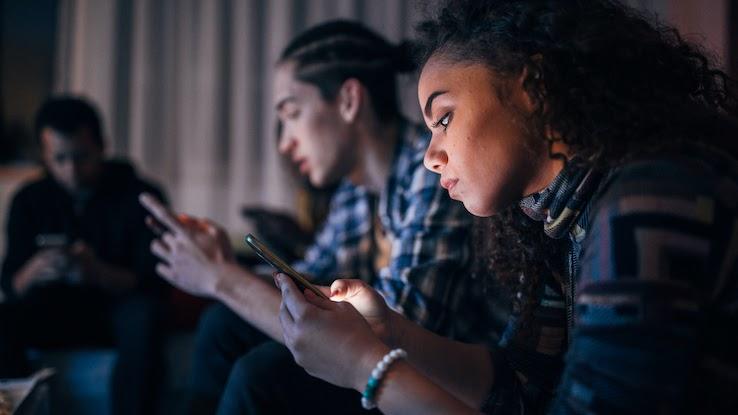
From dawn until dusk, many of u.s. sneak moments here and at that place checking our socials. Refreshing our feeds on social media platforms may be the first thing we do in the morning and the last matter nosotros practise at night. And information technology all adds upwardly: On average, according to data from Statista, most people in the United States spend over two hours a mean solar day scrolling, liking and perusing. Those two (or more than) hours open all of the states up to a lot of fun content, certain, but they also expose us to out-of-control amounts of viral headlines, "fake news" and other questionable content that can be surprisingly — and dangerously — influential.
The growing prevalence of faux news on various social media platforms is no secret — nearly a quarter of people in the U.s. rarely trust the news and other data they read on social media, some other Statista survey reveals. Just what nearly the other iii-quarters who may put themselves and others at risk by trusting everything they read? This proliferation of harmful fake news is raising the question of how social media platforms tin can tackle the balance between free speech and fake data — and whether those platforms are obligated to do so at all.
The nation is more than divided than ever, and it's largely up to the media to observe a way to regulate disinformation. But does doing and then run contrary to our free speech rights? To better assess this dilemma, it's essential to look at how simulated news actually spreads and affects people, forth with whether governments and platforms should mitigate the escalation.
How Does Faux News Actually Spread?
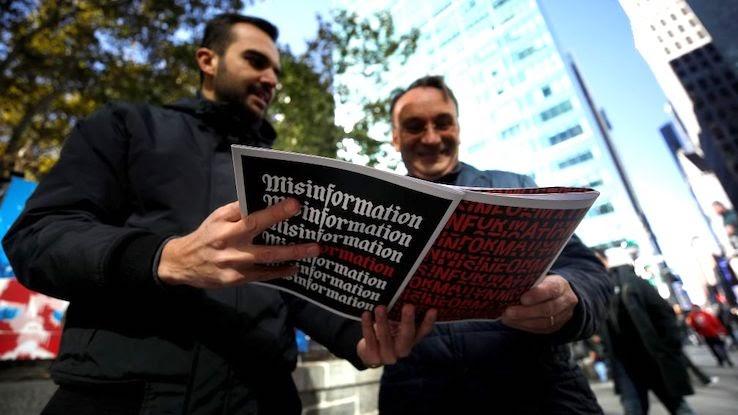
"Spreading similar wildfire" is a term that perfectly describes the sharing of fake news once it goes viral. But beginning it has to gain steam amongst everyday social media users. Typically, fake news stories showtime out as deliberate misinformation or as accidentally inaccurate data that someone didn't fact-cheque before reposting.
The first type often involves information that purposefully promotes a certain point of view or a person and omits any negative facts, similar to propaganda meant to change the way people think well-nigh a subject. The second is often a result of misinterpreted satire or even a snippet of a parody or a joke that people unintentionally take seriously. The difference lies in intent, too: The starting time type is meant to deceive, and the 2nd is meant to entertain. Simply both can have like effects.
Normally, the sharing of fake news starts among smaller groups before reaching increasingly wider audiences on social media. The news first spreads among groups of people with like interests or among shut friends. They repost something on their social media feeds when they discover it interesting or shocking or when it reinforces their points of view. Then, curious people and friends of friends may showtime to repost it to their circles, the members of which and then share the news further. Soon, the inaccurate piece of information has reached the masses before it's been properly fact-checked (or questioned at all).
At this stage, the fake news might go viral. According to Oxford University and the Reuters Institute, social media personalities with large followings are often the culprits. They're considered "super-spreaders" who tin very easily share inaccurate information with their impressionable followers (whom they tend to have a lot of). If you accept an extremely active network, y'all might too frequently come beyond simulated information shared between your own friends and family.
How Serious Is the Fake News Problem on Social Media?
To evaluate how powerful fake news is, it helps to look at some examples of incidents when viral news turned out to be complete misinformation. The majority of many of these contempo "facts" tend to focus on the coronavirus pandemic and the 2022 ballot; however, false news tin can encompass simply about any topic. Beneath are two examples of viral news that turned out to be factually imitation.
The Original Claim: An NPR report revealed that 25 million votes cast for Hillary Clinton in 2022 were false.
The Breakup: These claims originally came from a website called YourNewsWire, which stated that the report was fabricated by the Pew Enquiry Eye — an organization that'southward mostly regarded as ane of the most credible, unbiased polling centers in the The states — with statements cited from an InfoWars article. The source of this data was twisted to fit a narrative trying to invalidate Clinton'due south pop-vote victory. It turned out that the original study the fake news was based on was actually made in 2012 and stated that 24 million voter registrations were no longer valid due to deaths or were inaccurate due to voters moving to other states, not that they had voted fraudulently. Information technology had nothing to exercise with the results of the 2022 election.
The Original Claim: Page 132 of a mysterious Pfizer "vaccine report" stated the vaccine could cause birth defects via genetic manipulation.
The Breakdown: A viral photo shared on social media stated that page 132 of Pfizer's COVID-19 vaccine safety instructions revealed that the vaccine may lead to nascence defects. It was accompanied by a link that took users to the alleged instructions. Withal, this link only led to documentation from a publicly available Pfizer clinical trial rather than the official government document. Furthermore, page 132 outlined abbreviations, not fertility impact information. Another page independent a brief mention that trial patients should avoid getting significant for 28 days after receiving the last dose of the vaccine — common pharmaceutical communication for all vaccines in relation to pregnancies.
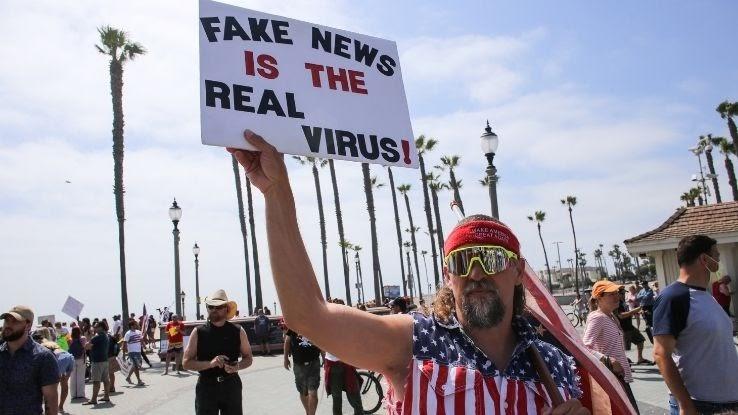
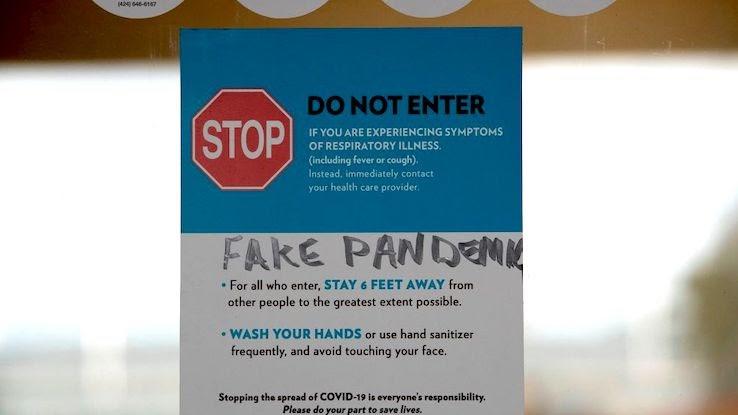
There are costs to this type of simulated news; when people believe it and spread it, it can put others in danger. For example, in the case of COVID-19 vaccine misinformation — and simulated news about the virus itself — consequences can be dire. BBC reports that, in add-on to an unchecked increase in the spread of the novel coronavirus because fake news led people to believe the virus was a hoax, people put their ain and others' lives at gamble in diverse means as a issue of "facts" they learned nearly COVID-19 on social media. Arson, assaults, attacks and other notable acts of violence occurred, all of which pose "potential health threat[due south]" both to believers of the fake news and those who speak out against those who believe it.
What Role Does Freedom of Speech Play?
Fake news clearly has the potential to cause harm. But does that mean the social media platforms where it spreads are obligated to take steps to reduce users' exposure to potentially harmful information? Many people cite the First Amendment in justifying the argument that social media sites shouldn't exist held accountable for the damaging false news that proliferates on them.
The Outset Amendment is a section of the Constitution's Bill of Rights that protects, amid other things, freedom of speech — our right to limited ourselves, our ideas and our opinions without being punished for doing so. This makes content regulation a much harder task online. Unless misinformation presents serious damage, the content of fake news is more often than not protected by the First Amendment. And some people argue it should remain protected because censorship would exist a grade of oppression and a violation of human being rights.
In dissimilarity, those who fence freedom of expression doesn't fully apply to fake news note that the First Subpoena doesn't necessarily protect an individual's right to lie or to "intentionally mislead an audience and sway public opinion for political gain," according to the Centre on Homo Rights Education. In addition, co-ordinate to Dr. John L. Vile, the dean of political science at Center Tennessee Country University, "the First Subpoena is designed to further the pursuit of truth, [but] it may not protect individuals who…brandish actual malice by knowingly publishing false information or publishing information 'with reckless disregard for the truth.'"
While information technology'south valid to point out the dangers of government censorship, it'due south as important to admit the dangers of spreading false information and to demand alter.
What Can Be Done to Regulate Fake News?
It'southward clear that fake news can spread quickly — and then quickly that information technology may appear nearly impossible to contain. And so what tin can be done to balance free speech with accountability and potentially stem the flow of all the fakeness? It's relatively easy, at least on a personal level, to create new consumption habits past making a concerted effort to seek out fact-checking websites — 2 reliable choices are Snopes and FactCheck.org — and verify a claim's veracity. But that alone doesn't terminate fake news from spreading.
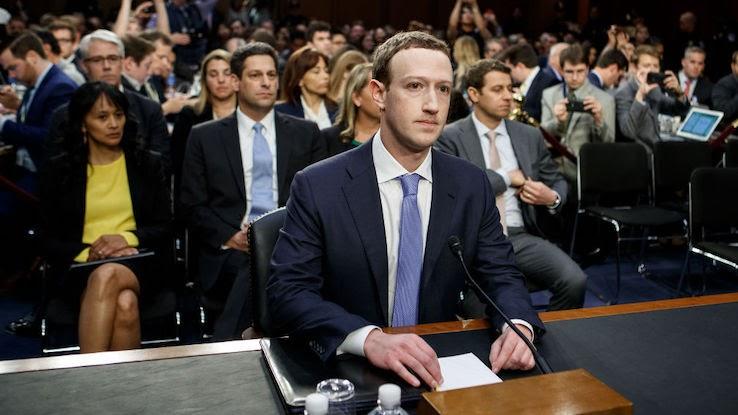
While social media platforms may not be legally obligated to protect users from imitation news, they may be morally compelled to do and then. If they can recognize that their platforms, by pattern, are contributing to the dissemination of harmful media, they should take information technology upon themselves to place limits on that data. It may not be possible for governments to step in and levy restrictions without compromising or violating freedom of speech — and it may not be their identify to practise and so. "In that example," states the Eye on Man Rights Pedagogy, "the onus to address this issue should not balance solely on the government. Corporations such as Facebook and Google should ensure that the entities responsible for creating inaccurate content are regulated accordingly."
Fortunately, information technology appears that some sites are working towards this. NBC News reported that, during the 2nd quarter of 2020, Facebook removed 22.five one thousand thousand posts containing hate speech and 7 million posts "sharing fake information about the novel coronavirus, including content that promoted fake preventative measures and exaggerated cures." This is a step in the right direction, to be sure, but Facebook, other platforms and fifty-fifty media outlets will need to increase these efforts if real change is to exist achieved.
Source: https://www.ask.com/culture/social-media-free-speech-accountability?utm_content=params%3Ao%3D740004%26ad%3DdirN%26qo%3DserpIndex
Belum ada Komentar untuk "How to Cite Social and News Media Violent Extremism Isis and Online Speech Research Review"
Posting Komentar